
Steel Blanking
Circle, rectangular and shaped blanks cut from coil up to 72 inches wide, on five presses from 400 to 1,200 tons. Our on-site die shop supports blank-through, compound and progressive blanking.
Will Your Part Fit? Start Here.
If your blank falls inside these ranges, we can very likely run it. Outside them, send the print anyway.
- Coil width
- 2.5–72 in
- Coil inside diameter
- 22 in
- Coil weight
- Up to 55,000 lb
- Gauge
- .020–.500 in
- Blank size
- 2–60 in across
- Feed per stroke
- Up to 75 in
- Press force
- 400–1,200 tons
- Bed size
- Up to 84 × 120 in
- Presses
- 5 mechanical, with straighteners
If It Starts Flat, We Can Cut It.
Blanks are the flat starting point for drawing, forming, stamping or welding. Circles are our specialty, and most two-dimensional shapes are possible.
Circles
Wheel discs, tank heads, water heater ends.
Rectangles
Square or radiused corners.
Trapezoids
Nested head to tail to cut scrap.
Pierced
Blank and pierce in one stroke.
To Your Print
Send the drawing.
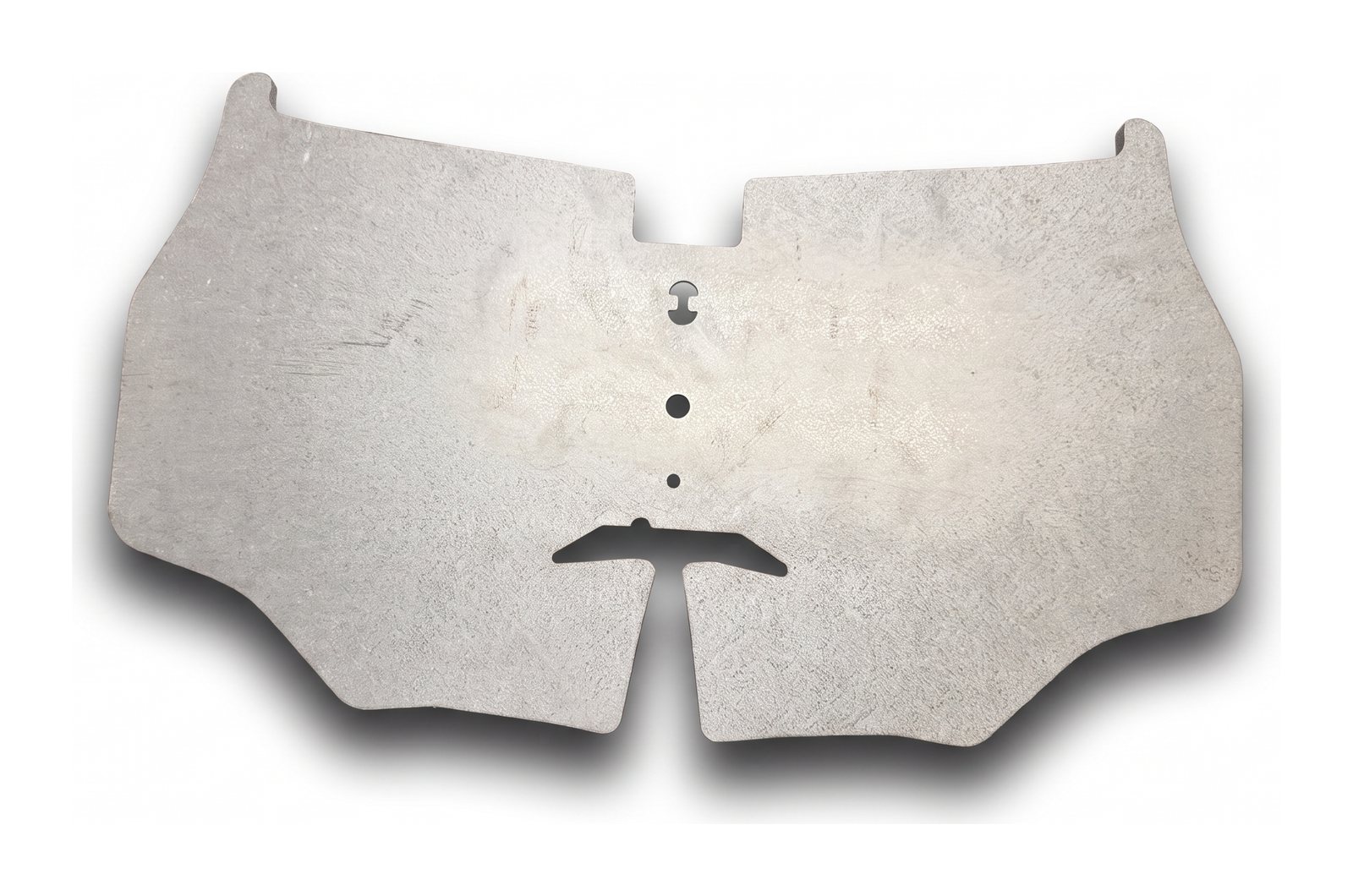
Three Ways to Cut a Blank.
Our on-site die shop builds blank-through, compound and progressive dies. The right die depends on the shape, the features and the volume.
-
Blank-Through
The punch pushes the blank down through the die and it drops out underneath. Fast and simple, and the workhorse for circles.
-
Compound
Blanks the outside and pierces the holes in the same stroke, so every feature lines up with the edge exactly.
-
Progressive
The strip moves station by station, with an operation at each one, and a more complex part comes off every hit.
Circles Are Where We Started.
Toledo Blank built its name on circle blanks for wheel makers, and circles are still what we cut most: wheel discs and rims, water heater heads, compressor tank ends, cylinder halves and disc blanks.
Circles are cut several across the strip in staggered rows, so each one sits in the gap of the row before and less steel ends up as skeleton. The Nest Calculator shows how many fit across your coil, and How a Coil Becomes Blanks shows the line at work.
Re-Blanking.
Have blanks cut somewhere else that need a new outline, holes or a second shape? We re-blank and pierce them, or stamp them, without starting over from coil. Send the print and a sample.
High-Strength Steel Takes More Press.
HSLA and advanced high-strength steels make a part lighter at the same strength, but they take more force to cut and wear dies faster. We size the press and the die clearance to the grade, on presses up to 1,200 tons. Check the force for your part with the Press Tonnage Calculator.
A Die, or a Laser?
A laser or plasma table needs no tooling, so it suits prototypes and a few hundred parts. A blanking die costs money and time up front, then cuts a blank every stroke, with the same edge and the same size from the first part to the last. Once a part runs in the thousands, the die usually pays for itself, and if the die already exists, short runs are worth asking about.
From Your Print to a Banded Stack.
What happens between the print you send and the first truck. A part that runs on a die we already have can ship within a few weeks. A new die takes about 24 weeks.
Send a Print
Drawing, grade, gauge and yearly volume.
Die and Nest Review
We check for a die that already fits and lay out the nest that leaves the least scrap.
Tooling
If no die fits, we quote the tooling with the blanks, so you see the whole cost and the 24-week die lead time up front.
First Article
First pieces are measured against your print and sent for your approval before the run.
Production and Shipping
Counted, stacked and banded, ready for your line.
Mild Steel to Advanced High-Strength.
- Hot rolled
- Pickled & oiled
- Cold rolled
- Galvanized
- HSLA
- AHSS
These are the steels we run most; other specs are welcome. Send us your coil, or we source the steel through Heidtman Steel to your spec. If it needs pickling, slitting or galvanizing first, a Heidtman plant does it.
Got a Print? Get a Price.
Upload the drawing and the yearly volume. The quote form asks for the rest, and an estimator follows up.
Blanking, Explained.
What is steel blanking?
Blanking cuts a flat shape, the blank, out of steel coil or sheet in one press stroke. The blank is the part you keep; the leftover steel around it, called the skeleton, is scrap. Blanks then go on to be drawn, formed, stamped or welded.
How is blanking different from stamping?
Blanking makes a flat part. Stamping forms the steel into a three-dimensional shape, often starting from a blank. Many parts need both, which is why we do both under one roof.
Why are circles cut from staggered rows?
Offsetting every other row lets the circles sit into the gaps of the row before, so more blanks fit in each foot of coil and less steel ends up as skeleton. Try it in the nest calculator above.
What tolerances can you hold?
Typical blanks hold ±.010 in on size and keep burr under 10% of the steel thickness. Tighter is possible on the right die; put it on the print and we will tell you whether we can hold it before we quote.
How flat are the blanks?
Typically within .020 to .040 in. When your part needs flatter, we can level blanks as a second step.
Can you run our existing dies?
Yes. We review the die and run trials before the work moves, agree on who maintains it, and make small changes if it needs them. We keep about 150 dies on hand, around 50 in active use, and a die change takes about an hour.
Who builds and owns the dies?
Our die shop builds and maintains dies, and some are bought outside. You can buy the die and own it, or we own it as our tooling; the quote says which.
What volumes do you run?
Most of our work is repeat production, from a few thousand blanks a month to several truckloads a week. Short runs are worth asking about when the die already exists.
What size blanks can you cut?
About 2 to 60 inches across, from coil 2.5 to 72 inches wide and .020 to .500 inch thick. Outside that range, send the print anyway.
How long does a new blanking die take?
About 24 weeks. A part that runs on a die we already have can ship within a few weeks.
Do you supply the steel?
We can. Send us your coil and we blank it on a toll basis, or we source the steel through Heidtman Steel to your spec. If it needs pickling, slitting or galvanizing first, a Heidtman plant does it.
What steel can you blank?
Most of what we run is hot rolled, pickled and oiled, cold rolled, galvanized and high-strength steel, from .020 to .500 inch. Stainless and other specs run too when the part and the press allow; send the spec and we will tell you how we would run it.
Can you re-blank parts cut somewhere else?
Yes. We can cut a new outline or pierce holes in blanks from another supplier. Send the print and a sample.
What file types can you quote from?
STEP, IGES, DXF, DWG, Parasolid, SolidWorks, or a PDF we can import into CAD. For an early project, a sketch is enough to start.
How do I work out what a blank weighs?
Use the Blank Weight Calculator for one blank, or Blanks per Coil for the whole order.