
How Blanks Are Packed.
Finished blanks leave as lifts: counted stacks, capped, strapped and tagged, so they arrive flat and you know exactly what is on the pallet.
This animation needs WebGL, which this browser has turned off. The steps explain what it shows.
Pick a step to jump the animation to it.
Finished blanks are stacked on a pallet, edges lined up, until the lift reaches its count.
A kraft paper cap covers the top layer and keeps dirt and moisture off.
Poly straps go over the top and around the stack, pulled tight so nothing shifts on the truck.
The tag carries the part number, count, weight and the heat number that ties it back to the mill cert.
Why the Lift Matters
A lift has to suit your dock: light enough for your forklifts and short enough for your racks. The lift weight limit and the stack height decide how many pieces go on each one.
The tag is how you trace a part back to the steel it came from if a question ever comes up.
Try the Lift PlannerWords to Know
- Lift
- A banded stack of finished blanks or parts on a pallet, ready to ship.
- Heat number
- The mill's ID for the batch of steel a coil came from. It ties every part back to its mill cert.
- Mill cert
- The mill's test report for a heat of steel: chemistry and mechanical properties.
On Our Floor.
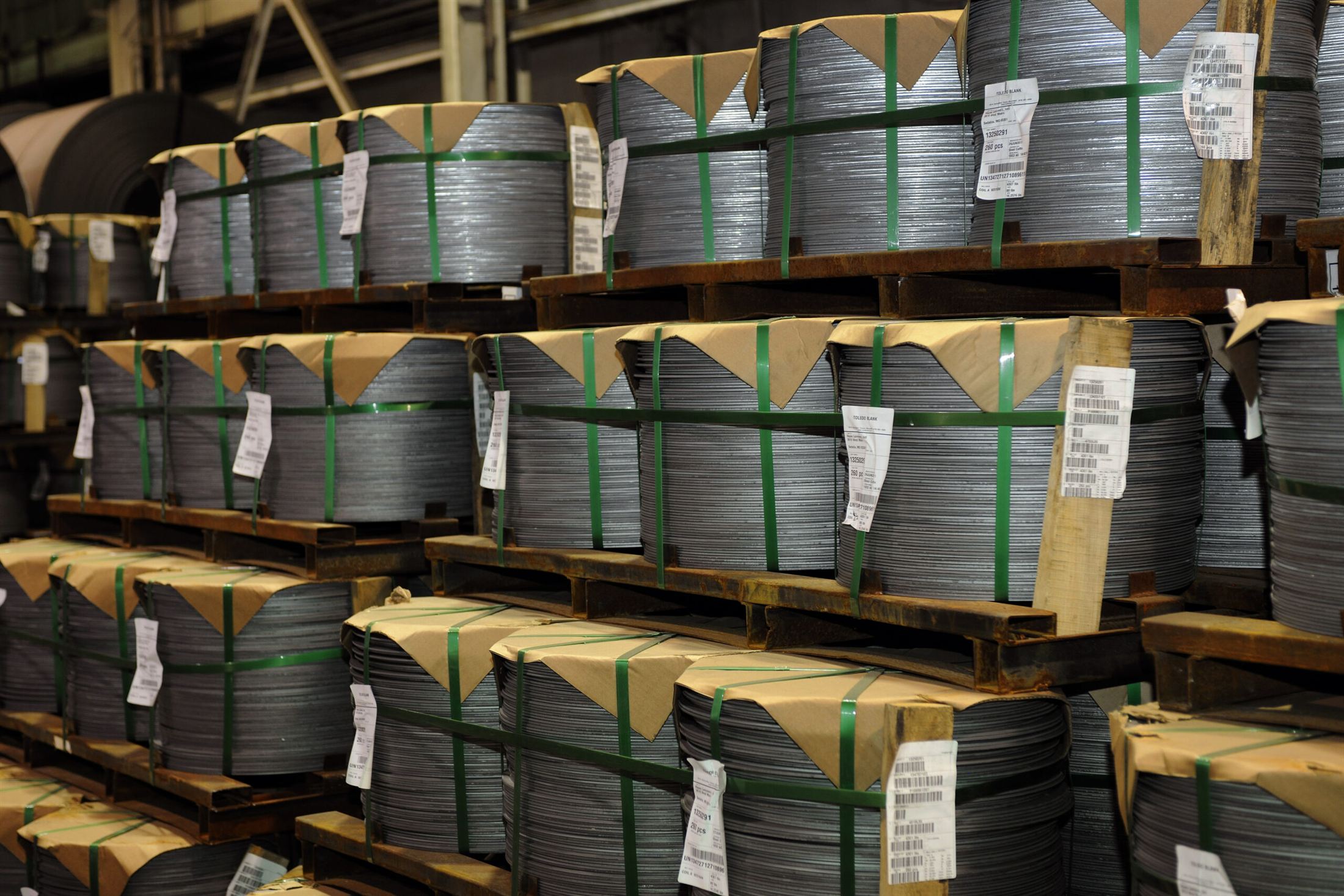
We pack lifts to your spec, with poly straps and your part number on every tag.
Value-Added ServicesPacking Questions.
How heavy is a lift?
Up to 5,000 pounds for production parts, or lighter to suit your forklifts and racks.
Can you pack to our spec?
Yes. Send the lift weight, stack height, caps, straps, tags and labels you need.
Why is the heat number on the tag?
It ties every part on the lift back to the mill cert for the steel it came from.
How many pieces fit on a lift?
The Lift Planner works it out from the weight and height limits.