
Steel Stamping
Drawn, formed and pierced parts, made from the same coil we blank. One plant, one supplier, from flat steel to a finished shape, on presses up to 1,200 tons.
Stamping Capacity.
The same five presses that blank also stamp, sized for parts made from our blanks: heads, wheel centers, brackets and housings. Bigger than this? Send the print anyway.
- Press force
- 400–1,200 tons
- Bed size
- Up to 84 × 120 in
- Gauge
- .030–.500 in
- Part size
- Up to 48 in across
- Draw depth
- Set by the part; send the print
- Presses
- 5 mechanical, shared with blanking
Drawing, Explained for Buyers.
Drawing pulls a flat circle into a cup, dish or head. The steel doesn't stretch much; it flows in from the edge, so the blank has to be bigger than the part looks.
How far a part draws in one stroke depends on the grade, the gauge and the die. A common rule of thumb is a blank about 1.8 to 2 times the cup's diameter. That is why we cut the blank and draw it in the same plant: the blank size, the grade and the draw plan are worked out together.
If the steel needs pickling, slitting or galvanizing first, a Heidtman plant does it before the blank is cut: one family from coil to finished part. See the whole chain.
Size the blank for your cup with the Cup Blank Size Calculator, or watch it happen in How a Blank Becomes a Drawn Part.
Tooling for Stamping.
Our die shop builds and maintains dies, and some are bought outside. You can buy the die and own it, or we own it as our tooling; the quote says which. A new die takes about 24 weeks, so we quote the tooling with the parts and you see the whole cost and timing up front.
Your Part Number, in the Steel.
Embossing can put your part number into each part in the same stroke, so it can't fall off or wash off the way a label can.
What a Stamping Press Does to a Blank.
Most parts combine more than one of these, in one die or across several. We plan the die sequence with you from the print.
-
Drawing
The punch pulls the blank into the die to make a cup, dish or shell. Tank heads and housings start here.
-
Forming
Bends, flanges and offsets that give a flat blank its shape without stretching it deep.
-
Piercing and Trimming
Holes, slots and a clean final edge, cut in the same press as the forming where the die allows.
-
Embossing
Raised ribs, beads and marks that stiffen a panel or carry your part number into the steel.
Stamping or Fabricating?
A part cut on a laser and bent on a brake, or welded from several pieces, needs no die, so it suits prototypes and small quantities. A stamped part costs more up front for the die, then comes out the same every stroke, often in one piece where a fabrication needs several pieces and a weld.
Once a part runs in the thousands, stamping usually costs less per part and holds its shape more consistently. If the die already exists, shorter runs are worth asking about.
Stamping Blanks You Send.
Already buying blanks somewhere else? We can stamp them, or re-blank them to a new outline or with new holes, without starting over from coil. Send the print and a sample.
Designing a Part That Stamps Well.
- Bend radius
- Keep the inside radius at least the steel's thickness, and larger for high-strength grades.
- Holes near bends
- Keep holes about two and a half thicknesses plus the bend radius away from a bend, so they don't stretch out of round.
- Hole size
- Make holes at least as wide as the steel is thick; smaller ones are hard to pierce cleanly.
- Holes near edges
- Leave at least one and a half thicknesses between a hole and the edge of the part.
- Draw radii
- Give drawn corners generous radii, several times the thickness; tight ones are where a draw tears.
- Tolerances
- Hold tight tolerances only where the part needs them; they drive the die's cost.
General guidelines for mild steel. Your grade, gauge and print decide the final numbers, and we will flag anything that won't stamp before we quote.
What Comes Off Our Stamping Presses.
Each part type links to the industry it goes into, with a drawing and typical sizes.
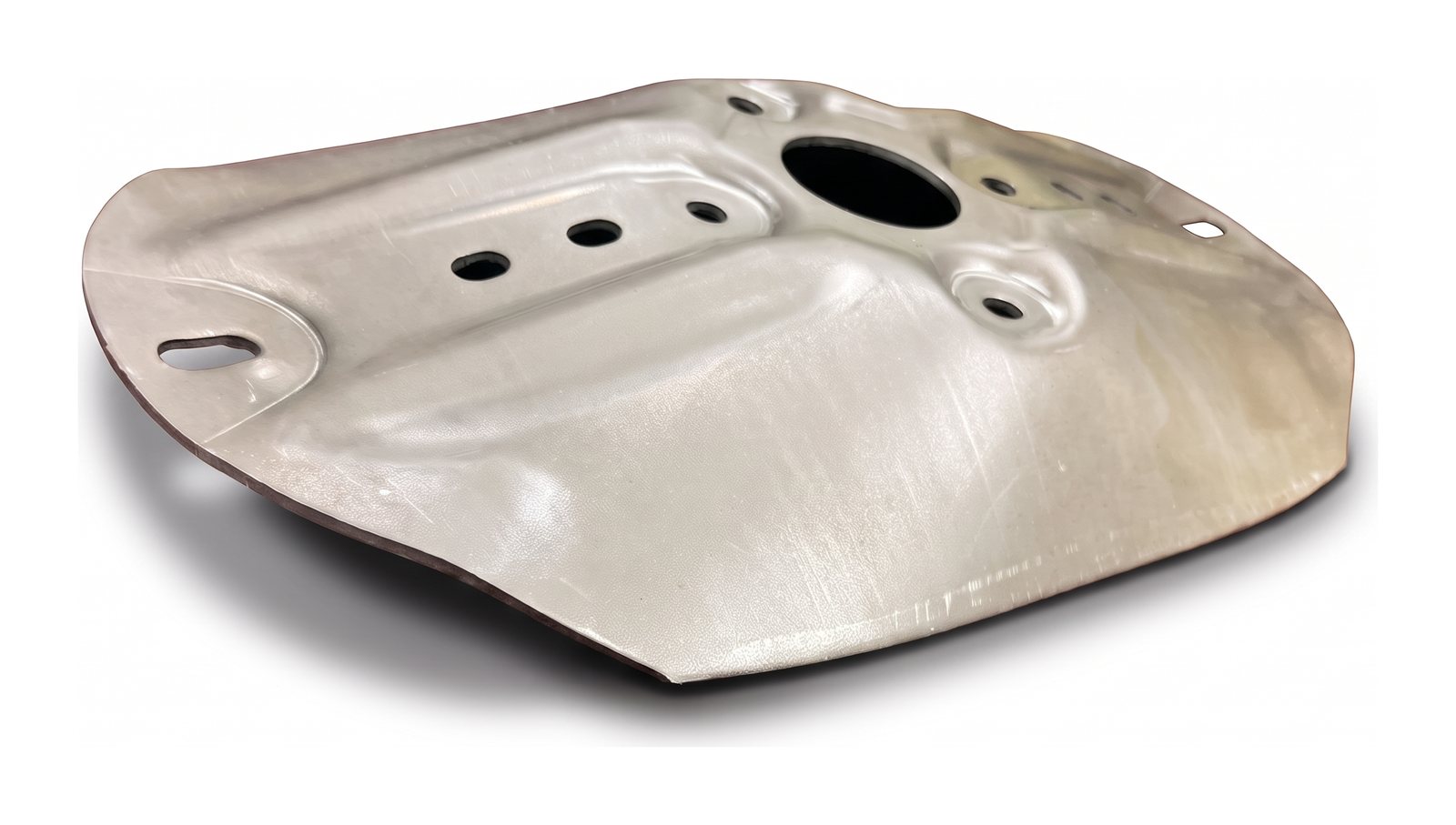
Drawn cover 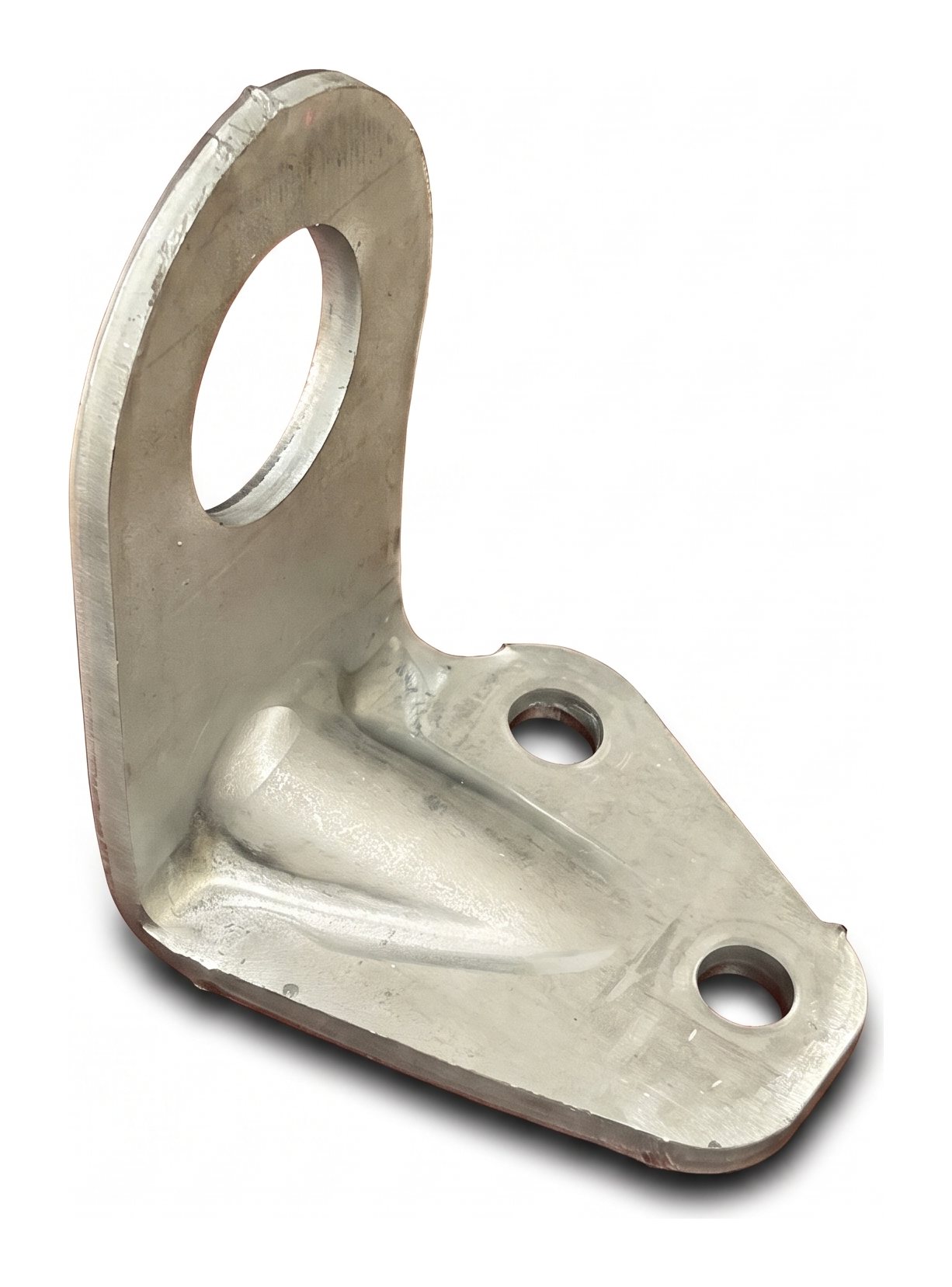
Formed bracket 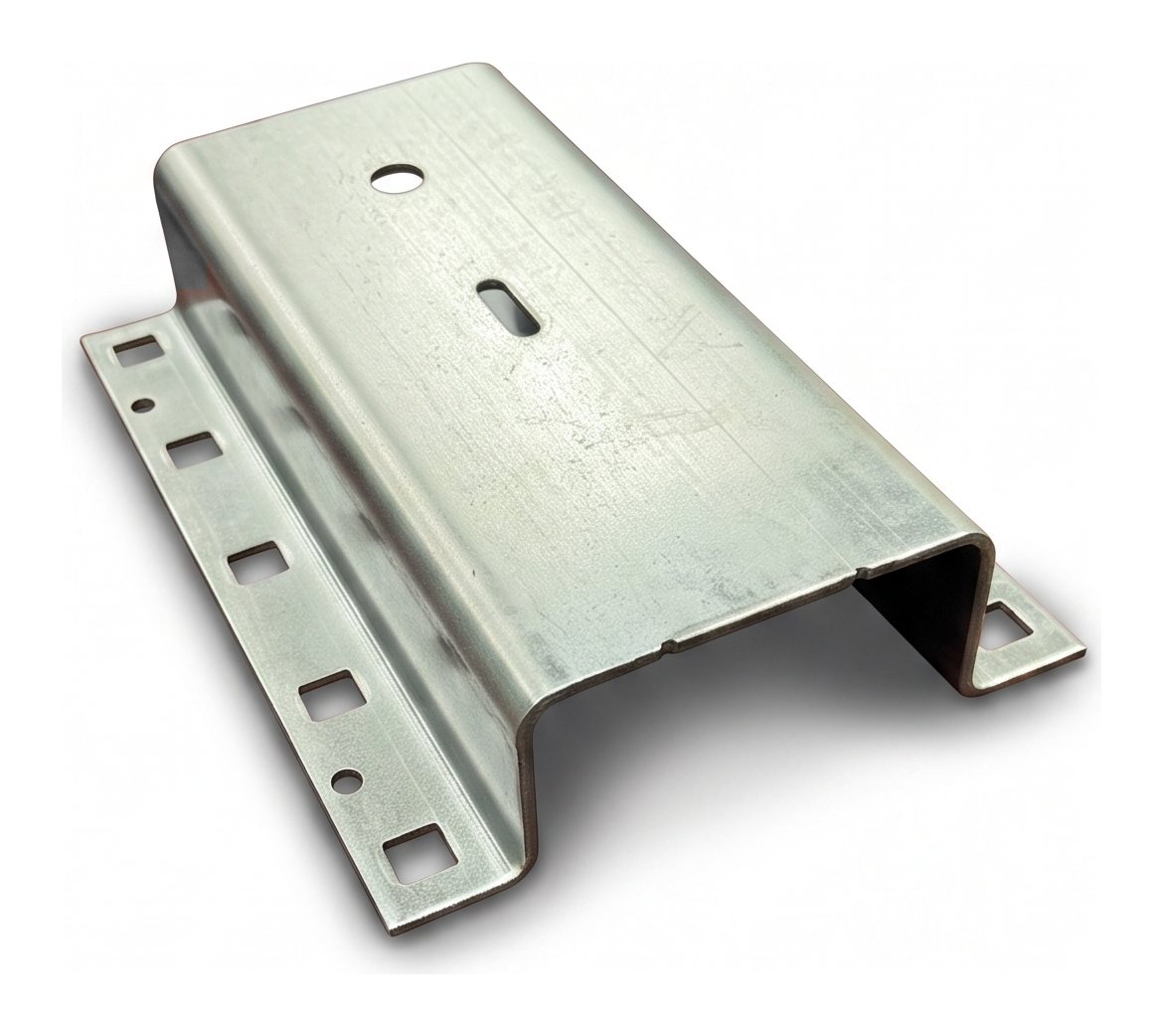
Formed channel
From Your Print to a Finished Part.
What happens between the print you send and the first truck. A repeat part on tooling we already have can ship within a few weeks. A new die takes about 24 weeks.
Send a Print
Part and blank prints, grade, gauge and yearly volume.
Draw and Die Review
We size the blank, plan the draw and the die sequence, and check for a die that already fits.
Tooling
If no die fits, we quote the tooling with the parts, so you see the whole cost and the lead time up front.
First Article
First parts are measured against your print and sent for your approval before the run.
Production and Shipping
Counted, packed to your spec and tagged, ready for your line.
Steel for Forming.
- Hot rolled
- Pickled & oiled
- Cold rolled
- Drawing quality
- Galvanized
- HSLA
These are the steels we form most; other specs are welcome. Send us your coil, or we source the steel through Heidtman Steel to your spec. If it needs pickling, slitting or galvanizing first, a Heidtman plant does it.
Got a Print? Get a Price.
Upload the drawing and the yearly volume. The quote form asks for the rest, and an estimator follows up.
Stamping, Explained.
What is metal stamping?
Stamping shapes flat steel in a press. A die and punch bend, draw, pierce or emboss the steel into a three-dimensional part. Most stampings start as a blank.
What is drawing?
Drawing pulls a flat blank into a die to form a cup, dish, head or cover. How far a part can be drawn depends on its size, the grade and the gauge.
Why buy blanks and stampings from one supplier?
The steel ships once instead of twice, one schedule covers the whole job, and one team answers for the finished part.
Can you stamp blanks we send you?
Yes. We can stamp or re-blank parts from blanks cut somewhere else. Send the print and a sample if you have one.
What volumes and part sizes do you run?
Most of our stamping runs are production volumes, from a few thousand to several hundred thousand parts a year, on parts up to about 48 inches across. Send the print and your yearly volume and we will tell you how we would run it.
How deep can you draw?
It depends on the part's diameter, the grade and the gauge. Send the print and we will tell you whether it draws in one stroke or two.
What gauge can you stamp?
.030 to .500 inch, on presses from 400 to 1,200 tons.
Can you stamp a part number into each part?
Yes, by embossing it in the die.
How much press does my part need?
The Press Tonnage Calculator estimates the force to cut the blank. Drawing and forming loads come on top of that and depend on the part; send the print and we will size it.
How many dies does one part take?
A simple part can be blanked and formed in one die. A part with a draw, holes and a trimmed edge may take two or three, run one after another. We plan the sequence from your print.
Can we own the die?
Yes. You can buy the die and own it, or we own it as our tooling; the quote says which, and who maintains it.
How fast does a repeat part ship?
Within a few weeks, if the tooling already exists.
Do you weld or assemble parts?
Not today. We cut and form: blanking, stamping and the services around them. Welding and assembly stay with you or your next supplier.