
How a Coil Becomes Blanks.
A blanking line turns a coil of steel into stacks of flat blanks, one press stroke at a time. Follow one coil through.
This animation needs WebGL, which this browser has turned off. The steps explain what it shows.
Pick a step to jump the animation to it.
A coil is one long strip of steel wound tight, up to 72 inches wide and over 50,000 pounds. The uncoiler holds it on a mandrel so it can turn.
The loose end is pulled off the coil, flattened and fed into the die, between its top and bottom halves.
The press comes down and cuts three circles at once. The strip moves forward one pitch and it happens again. What is left, the skeleton, goes to scrap.
Blanks drop through the die onto a conveyor and stack on a pallet, ready to be counted and strapped.
Why the Layout Matters
Blanks are laid out side by side across the strip. How tightly they nest decides how much steel ends up as skeleton, and scrap is steel you pay for.
Staggering the rows, so each circle sits in the gap of the row before, can fit more blanks on the same coil.
Try the Nest CalculatorWords to Know
- Coil
- Steel strip wound into a roll, the way it leaves the mill and arrives at our presses.
- Pitch
- How far the coil moves forward between press strokes. Also called progression.
- Skeleton
- The steel left over after the blanks are cut out. It is scrap, so good nesting keeps it small.
- Nesting
- Laying blanks out on the coil to use as much steel and leave as little scrap as possible.
- Web
- The strip of skeleton left between two blanks, or between a blank and the coil edge.
On Our Floor.
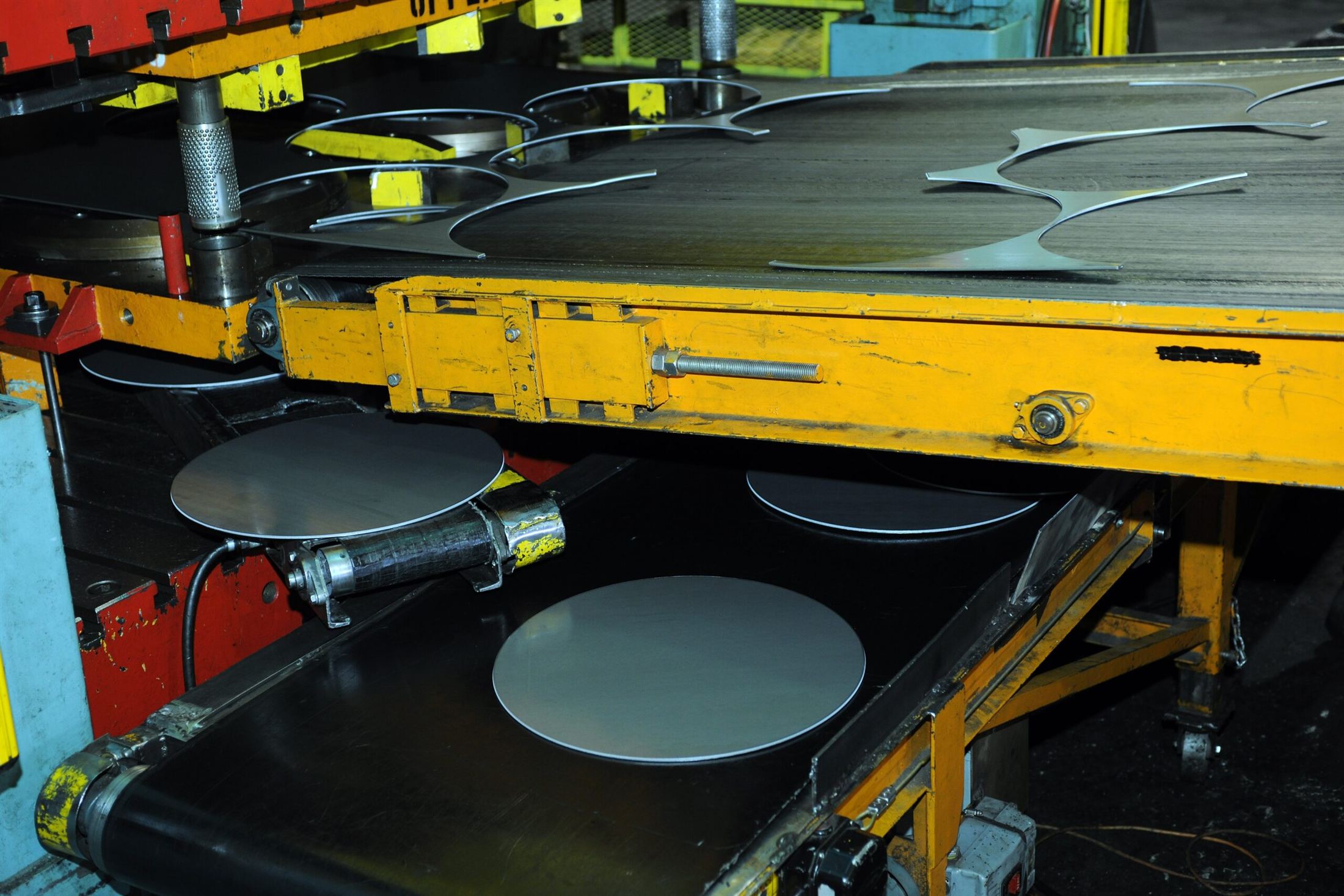
Our lines run coil up to 72 inches wide and 55,000 pounds, on presses from 400 to 1,200 tons.
BlankingBlanking Line Questions.
What is a blanking line?
An uncoiler that holds the coil, a straightener that flattens the strip, a feeder that moves it one pitch at a time, and a press with a die that cuts the blanks.
What happens to the skeleton?
It goes to scrap and is recycled. Good nesting keeps it small, because scrap is steel you paid for.
How many blanks does one coil make?
It depends on the coil weight, the width and the nest. The Blanks per Coil calculator works it out.
How wide a coil can you run?
Up to 72 inches wide and 55,000 pounds.